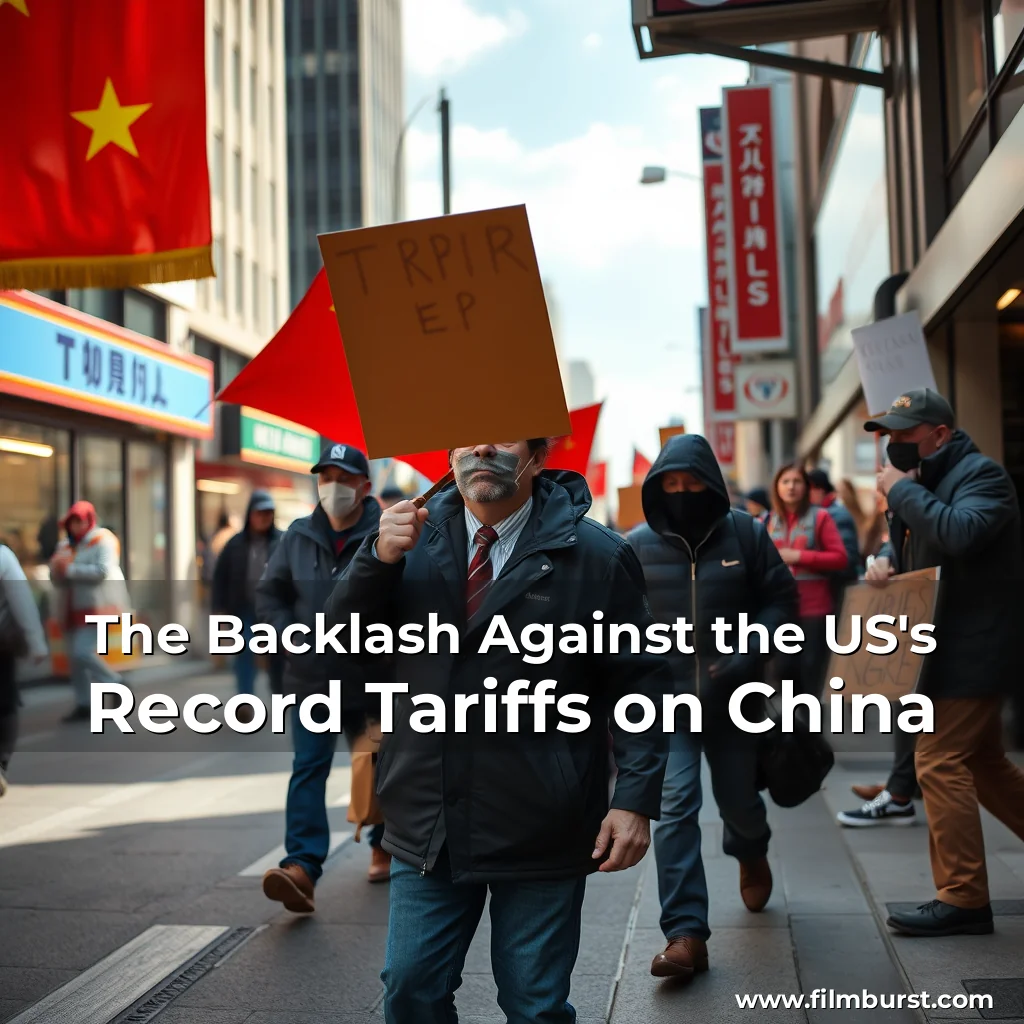
China has taken a significant step back from the door it has long kept open to american films, with the china film Administration announcing plans to further reduce the number of US movies allowed to screen in the country. This move comes in response to the newly imposed record 125% tariffs on Chinese products entering the US, a decision that has sparked widespread criticism and retaliation from China. The statement from the China Film Administration warns that the US government’s use of tariffs as a means of exerting pressure on China is “wrong” and will inevitably lead to a decline in the domestic audience’s favorability towards American films. The administration has pledged to follow market rules and respect the audience’s choice, while also reducing the number of American films imported into the country. This development mirrors the proposals put forth by two influential Chinese bloggers earlier in the week, which suggested that China has a range of tools at its disposal to retaliate against the US. Liu Hong, a senior editor at Xinhuanet, the website of the state-run Xinhua news agency, and Ren Yi, the grandson of former Guangdong party chief Ren Zhongyi, both posted identical proposals calling for a significant reduction in the importation of US movies and a further investigation into the intellectual property benefits of American companies operating in China. The backlash against the US’s record tariffs on China is a significant blow to the global film industry, with major studios such as Walt Disney Co, Paramount Global, and Warner Bros Discovery Inc suffering a decline in shares immediately after the announcement. The loss of China as a major market for US films is a significant blow, particularly given the country’s status as the world’s second-largest film market after the US. China is the world’s second-largest film market, and in recent years, domestic offerings have outshone Hollywood imports. However, this new development marks a significant shift in the country’s approach to film imports. Last week, the newly released A Minecraft Movie from Warner Bros topped the Chinese box office with ticket sales of $14.5m – around 10% of the global total. In 2024, the highest-grossing US film released in China was Godzilla x Kong: The New Empire, which took $132m in that territory, towards a global total of $572m. The number of US films approved for release in China has been declining since 2018, when it peaked at over 60. This decline can be attributed to escalating tensions and the increased popularity of homegrown movies. However, many believed that the slate of upcoming Hollywood blockbusters would swell China’s year-end coffers further, with Variety projecting a $7.6bn 2025 total, up significantly from 2024’s $5.8bn. Films like Mission: Impossible – The Final Reckoning, Superman, Jurassic World Rebirth, and Avatar: Fire and Ash were conceived and edited with a Chinese release in mind. These movies would have been significant contributors to China’s year-end box office, but now their potential earnings are in jeopardy due to the new tariffs and China’s decision to limit the number of US films imported. In response to the China Film Administration’s announcement, Walt Disney Co, Paramount Global, and Warner Bros Discovery Inc have all seen a decline in their shares. This is a significant setback for the global film industry, particularly for studios that rely heavily on China as a major market. Despite the potential backlash, the film industry remains optimistic about the future. The Chinese government has stated that it will continue to support the development of the country’s film industry, and there are still many opportunities for US films to succeed in China. However, the new tariffs and China’s decision to limit the number of US films imported have significant implications for the global film industry. The move also highlights the increasingly complex and interconnected nature of global trade and commerce. The US’s record tariffs on China have sparked a range of reactions, from retaliation to countermeasures, and the film industry is just one of many sectors that is feeling the impact. In conclusion, the China Film Administration’s announcement marks a significant shift in the country’s approach to film imports. The decision to limit the number of US films imported and reduce the importation of US movies is a response to the US government’s use of tariffs as a means of exerting pressure on China. While the global film industry remains optimistic about the future, the new tariffs and China’s decision have significant implications for the industry, particularly for studios that rely heavily on China as a major market.

news is a contributor at FilmBurst. We are committed to providing well-researched, accurate, and valuable content to our readers.