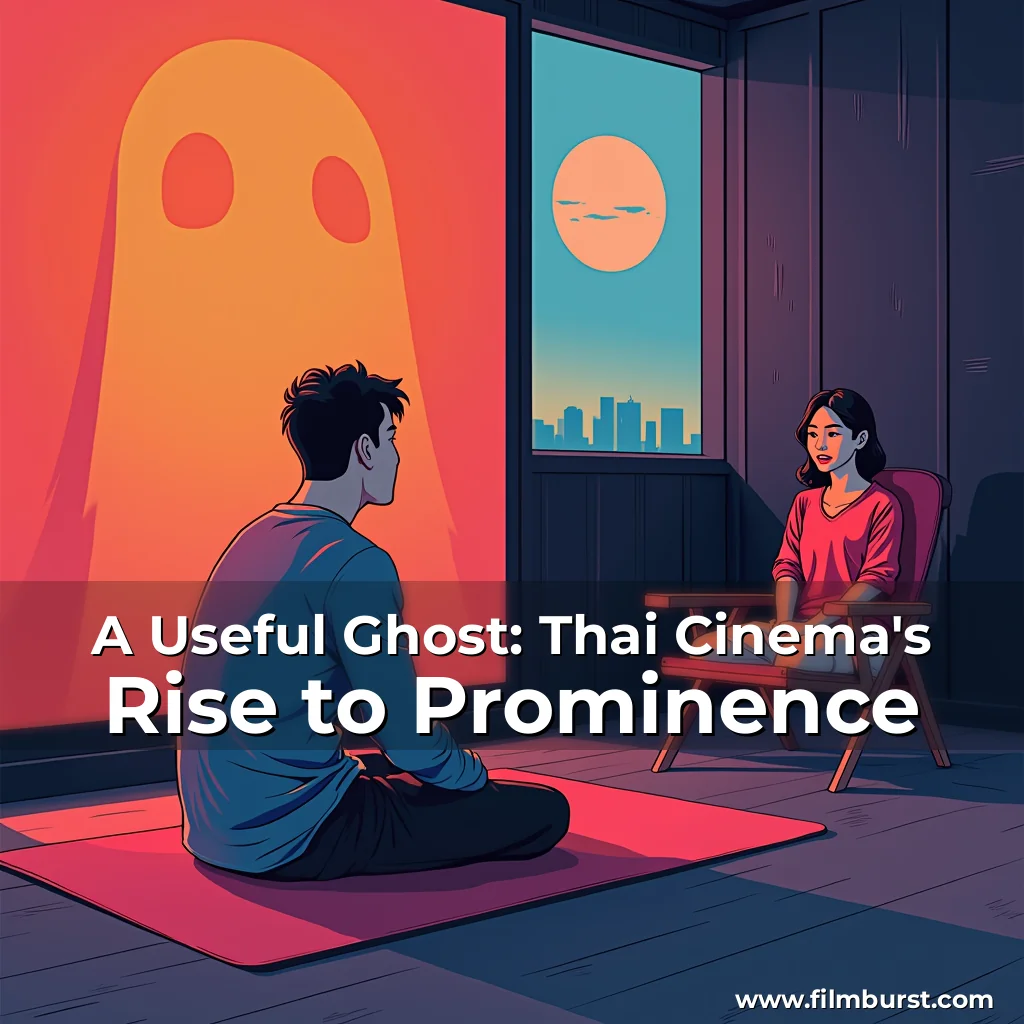
thai cinema has long been known for its distinctiveness and creativity. The recent release of A Useful Ghost, a film that premiered at the 2025 Cannes Film Festival, is a prime example of this. Written and directed by Ratchapoom Boonbunchachoke, the film tells the story of a woman who dies from dust pollution and returns to possess her husband’s vacuum cleaner to protect him from suffering the same fate. But what sets Thai cinema apart from other film industries? According to Boonbunchachoke, thai film is like Thai food – the flavour needs to be strong. He measures a film’s success by how emotive it is, driving creators to make dramatic and emotionally rich films. One of the key factors contributing to Thai cinema’s success is its ability to showcase culturally authentic, hyperlocal elements. These depictions not only resonate with local audiences but also appeal to foreign viewers, making them feel like “cultural insiders”. This is evident in the film’s unique blend of genres, which bends the rules and offers a vision that is both intimate and universal. Thai advertising is also known for its creativity and unconventionality. In 2024, Thailand won nine awards at the Cannes Lions awards, with a win-to-entry ratio of 2.1:1. This is a testament to the country’s innovative approach to storytelling, which often throws out the rule book and leans into what feels most interesting. The Thai film industry’s success can be attributed to a combination of factors, including economic growth, digital connectivity, and government support. The country has the eighth-fastest broadband internet in the world and 91% of its population is connected to the internet. This has created a thriving ecosystem of cinema and production companies, with many directors being trained abroad and returning home to hone their craft. Thai cinema is also recognized as an attractive filming destination due to its scenery, affordability, and labor force with mature production and English-language skills. This has led to an increase in foreign productions shooting in Thailand, generating billions of dollars for the economy. However, there is a risk of typecasting, where certain productions portray Thailand in a limited and biased way. This can lead to a curated history that fits a certain state agenda. For example, the “salacious and hedonistic” depictions of Thailand associated with sex tourism, lawlessness, and drugs seen in The Hangover Part II and The Beach. To avoid this, the Thai government has introduced incentives for foreign productions that employ Thai cast and crew, use designated tourist areas as film locations, and portray Thailand or its culture in a positive light. The Thai Film Office, part of the government’s tourism department, has been integral in growing the industry. Despite the challenges, Thai cinema continues to thrive, with many filmmakers taking risks and joining independent films in tackling darker and grittier topics. As Boonbunchachoke noted, “I think nowadays [these filmmakers] kind of know and [are finding] new ways to speak and talk about the issue without compromising too much.”
The success of A Useful Ghost and other Thai films is a testament to the industry’s ability to innovate and push boundaries. With its unique blend of genres, culturally authentic elements, and creative storytelling, Thai cinema is sure to continue to captivate audiences around the world.

news is a contributor at FilmBurst. We are committed to providing well-researched, accurate, and valuable content to our readers.